



Leveling Castors
Haodeli: Leading Leveling Castors Manufacturer in China!
Shenzhen Haodeli Furniture Fittings Co., Ltd. (referred to as "Haodeli Hardware Fittings Factory") is a manufacturer specializing in the production and sales of furniture hardware accessories and furniture plastic accessories manufacturers. The main products are: inner and outer tooth nuts, three-in-one connectors, casters universal wheels and so on.
Wide Product Range
We can export various custom fasteners with a wide variety of plating, which includes different colors of Zinc, Black Oxide, Black Anodizing, Tin, Silver, Waxing, Passivation, Nickel, Antique Brass, Chrome, Cadmium, GM Spec, Magni Coating, Chrysler spec, and so on.
Quality Raw Materials
We supply both inch and metric fasteners. Our fastener line includes a wide range of materials such as steel, stainless steel, brass, silicon bronze, Hastelloy, Inconel, Monel, aluminum, alloy 20, 17-4PH, 17-7PH, titanium, and other non-ferrous metals.
Quality Guaranteed
From quality testing of raw materials to the careful management of manufacturing processes and the comprehensive testing of finished products, we can deliver customer orders that live up to and exceed expectations.
Advanced Equipment
With state-of-the-art Japanese technology power coating lines and professional fabrication machines such as automatic welding and tube laser cutting machines, customers can be assured that every product will be fabricated with precision and care.


Introduction of Leveling Castors
Leveling castors, also known as leveling casters, are specialised castor wheels that combine the mobility of traditional casters with the stability of adjustable leveling feet. Leveling casters are dual-purpose casters. You can use them to roll objects, and you can use them to level objects. All casters support rolling, but only leveling casters support leveling. They are designed to allow easy movement of equipment or furniture and then provide the capability to adjust the height and stabilize the item on uneven surfaces, ensuring it is perfectly level and stationary. This dual functionality is achieved through a unique design that typically includes a threaded stem or a mechanism for height adjustment, along with a wheel that can be locked into place. Leveling castors are widely used in industrial applications, such as on workbenches, machinery, and heavy equipment, as well as in commercial settings like office furniture, to facilitate both mobility and precise positioning.
Models include: Finger operated, Ratchet operated and Heavy Duty Spanner operated adjustable castors.
Provide CAD Files Or 3D Files or Samples
Only through the above information you provided we can know the size, precision, and key features of the product to be controlled, which is the basis for us to accurately evaluate the price of the product.
Get a Quote
Tell us the quantity of products you need, and we will provide you with corresponding ladder prices according to different quantity requirements.
Specify Process, Material, Surface Treatment
If your requirements are consistent with the drawings you provide, it is not necessary to specify.
Order Your Parts
Send your order to us, we will reply to your specific delivery date.
Receiving Your Parts
After the order is completed, we will notify you in time and cooperate with you in logistics operations.
Key Features of Leveling Casters

Plastic Nylon Construction
Leveling casters often boast plastic nylon components that excel in durability and resistance. These materials withstand wear and tear, contributing to extended service life.

Chemically Compounded Rubber Leveling Pad
The leveling pad, typically constructed from chemically compounded rubber, provides exceptional grip and stability. It adapts to various surfaces, ensuring optimal contact and preventing slippage.

Effortless Mobile-to-Stationary Switch
These can be swiftly switched from mobile to stationary mode, providing the convenience of locking them in place when stability is required.
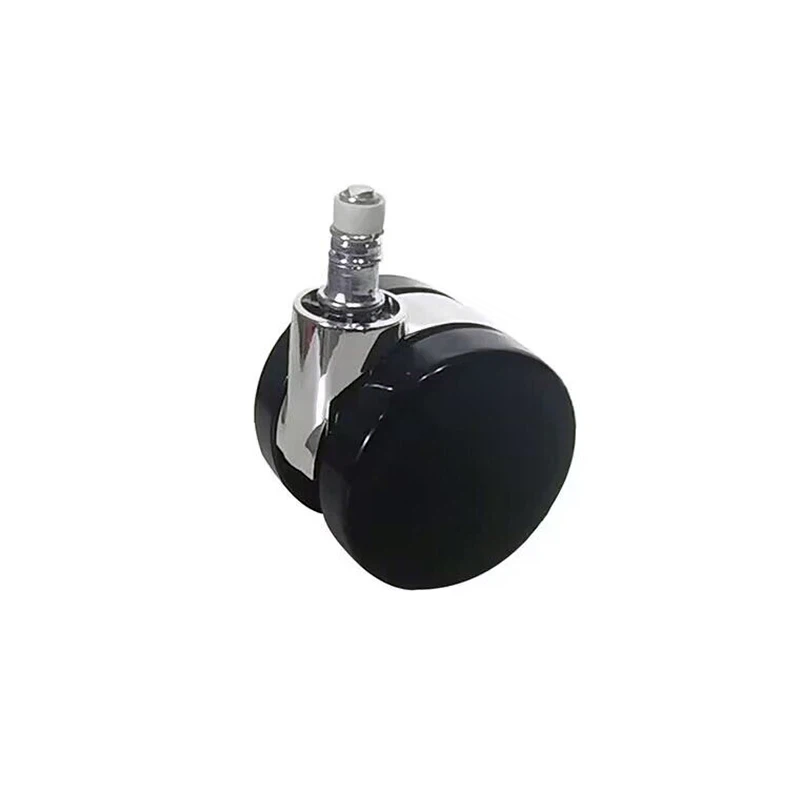
Drop-Forged Top Plate
The incorporation of a drop-forged top plate adds strength to the caster’s structure, enhancing load-bearing capacity and overall durability.
When inspecting a leveling caster, you may notice that it has a horizontal dial above the wheel. There are different types of leveling casters, but most of them feature a horizontal dial such as this. Turning the dial will adjust the height of the leveling caster.
Turning the dial in one direction will raise the leveling caster, whereas turning the dial in the opposite direction will lower the leveling caster. If you have multiple leveling casters on the bottom of an object, you can adjust their respective heights until the object becomes level.
Leveling casters still feature at least one wheel, but they also feature a leveling mechanism. The leveling mechanism typically consists of a pad. Adjusting the height of a leveling caster will press the pad against the ground or floor.
Benefits of Leveling Casters
Convenience and Portability
Like all other types of caster wheels, leveling casters offer great convenience and portability. Adding any caster wheel to stationary equipment immediately gives us the ability to move it from point A to point B without too much physical exertion or the need for a forklift or truck. The size or weight of the expected load does not matter much either. This can be easily resolved by choosing leveling casters with greater load-bearing capacity.
Adjustable Height
Adjustable leveling casters allow us to straighten any equipment, furniture, or machinery that may not lie flat on the floor. It is no secret that floors in warehouses and other industrial settings are prone to becoming uneven over time due to the constant traffic and weight loads over them. Installing adjustable leveling casters can easily resolve lopsided or tilted equipment due to uneven floor surfaces. All you need to do is hold the equipment in place, fully extend the leveling caster pillar so it lays flat on the floor, check for any more rocking, and lock it in place.
Ease of Installation and Use
Despite its additional leveling and locking features, casters are intuitive and easy to install and use. Some leveling casters only require four screws to attach them onto the underside of machinery. Meanwhile, some leveling casters already have a threaded stem or pin that you simply screw onto an existing or newly drilled hole. Manually adjusting the height of the leveling casters’ pillar is simple, too. Leveling casters are usually designed with an operating lever, thumb-wheel, or screw nut height adjustments.
Noise Reduction
Machinery and other industrial equipment normally make noise while in use. However, machines that are not level to the floor or are unsteady can result in even more noise due to the machinery’s vibrations. By ensuring the machines lay flat on the floor surface, leveling casters can reduce equipment vibrations and noise. Moreover, there are leveling casters equipped with anti-vibration leveling pads to further improve stability and reduce noise.
Better Wheel Resilience
Leveling casters are primarily designed for use with heavy equipment in mind. They generally have better wheel resilience or durability in comparison to standard caster wheels. As such, leveling casters can typically withstand more weight, road bumps, or sudden movements.
Improved Safety
Most importantly, leveling caster wheels help improve workers’ safety around heavy machinery. With such large loads, a simple wheel foot brake is often not enough to ensure the machine stays in place. Operating unsteady or wobbling heavy equipment opens up more risks for accidents and injuries. The vibrations and movement of the machinery can also potentially result in the equipment breaking down or even falling on a person. The firm floor locks and steadying mechanism of leveling casters are a huge help in preventing loss of control, especially when transporting heavy loads. It may help prevent large, heavy loads from slipping or sliding and hitting someone or another piece of valuable equipment. This is even more crucial for equipment that might be placed on a sloping surface.
Leveling Castors Applications
Industrial Equipment
In industrial settings, leveling castors play a crucial role in enhancing the mobility and stability of heavy machinery and equipment. They allow for easy repositioning and leveling on uneven surfaces, ensuring safe and efficient operation. This application is essential in manufacturing plants, workshops, and factories where machinery, such as workbenches, CNC machines, and assembly tables, require frequent movement and precise alignment. Leveling castors help minimize downtime, increase productivity, and reduce the risk of accidents in industrial environments.
Furniture
Leveling castors are commonly used in furniture, such as workbenches, cabinets, and display stands, to provide a combination of mobility and stability. They enable users to easily move heavy furniture, making rearrangement and cleaning more convenient. When locked in place, leveling castors ensure that the furniture remains stable, even on uneven surfaces. This application is valuable in both home and commercial settings, where versatility and ease of use are essential for accommodating various furniture layouts and purposes.
Laboratory Equipment
Leveling castors are essential in laboratory settings, particularly for scientific equipment. They allow for precise mobility and stability of sensitive instruments like microscopes, centrifuges, and analytical devices. These castors facilitate easy repositioning of equipment for experiments or maintenance, ensuring minimal disruptions to delicate procedures. The ability to level and secure the equipment on uneven surfaces is critical in maintaining the accuracy and reliability of scientific experiments. Leveling castors enhance the efficiency and safety of laboratory work, making them indispensable for researchers and technicians.
Heavy Machinery
In the realm of heavy machinery, leveling castors are instrumental for enhancing mobility and stability. They are often integrated into equipment like drill presses, lathes, and industrial tools, allowing for easy repositioning and alignment. These castors ensure that heavy machinery can be moved efficiently and securely, even in challenging industrial environments. Whether in construction sites or workshops, leveling castors reduce downtime, enhance safety, and improve operational efficiency for heavy machinery, making them a vital component in the industrial landscape.
How to Choose the Right Leveling Caster for Your Equipment


Knowing how convenient leveler casters can be for your equipment, you may be wondering how you’re supposed to choose the right set for your needs. After all, they aren’t all the same. The following information may help you decide.
Weight Capacity
You will need to factor in your machine’s lbs capacity before choosing the most suitable machine casters. The weight may also dictate the leveling caster material, such as stainless steel, cast iron, or something else.
Stem Mount vs. Plate Mount
The mount type can be quite important in the decision-making process. For example, do you need a stem mount or a plate mount? Stem casters can come in most small and large sizes, with fine or coarse threads. They attach to equipment with tapped bores to accept stems. However, plate mounts with a top plate, often made of stainless steel, are a preference by many for their security and convenience. Plate leveling casters have a plate with bolt holes that allow you to securely bolt the leveling casters onto something with a larger surface area.
Quantity
How many heavy-duty casters your equipment, machines, or worktables need may also factor into your decision. Some dual-wheel leveling casters come in packs of four, while others are available individually. The size and weight of your machine can dictate your decision.
Caster Wheels
Even though weight, mounting style, and quantities are important factors, so are the caster wheels themselves. After all, you will need these to move your equipment from A to B. Some of the best caster wheel materials on hand trucks, furniture casters, and more are nylon. Nylon wheels have various wheel diameters for many applications. They also tend to work reasonably well on various surfaces like wood, concrete, and even things like oil, grease, solvents, mild acids, and mild alkalines. Think about what the wheels will most be in contact with, and let that guide your decision.
Common Problem of Leveling Castors