



Furniture Nut
Haodeli: Leading Furniture Nut Manufacturer in China!
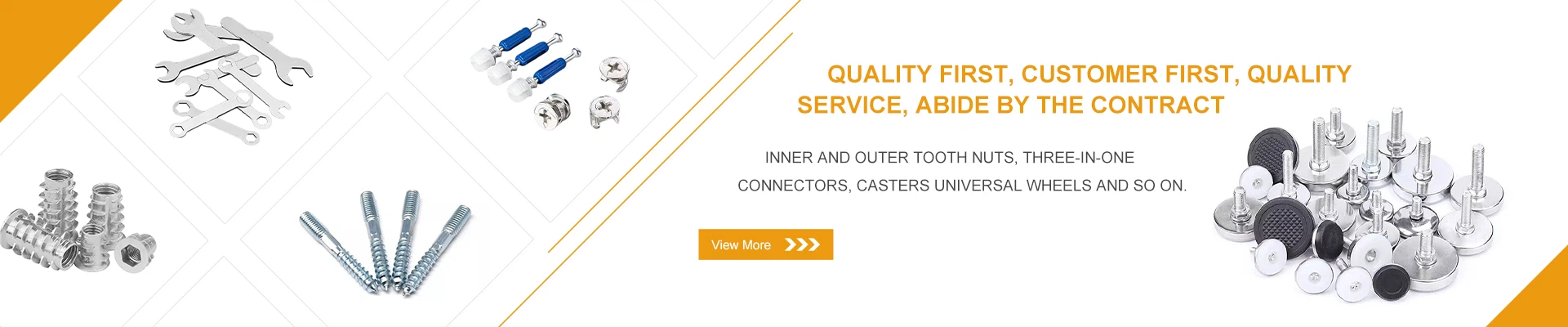
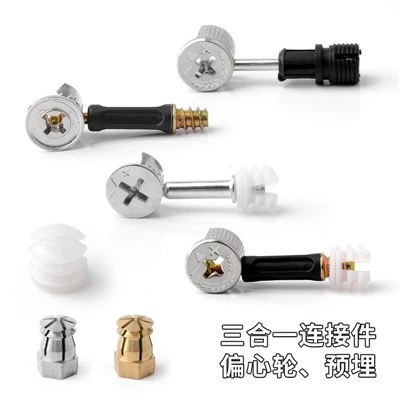
Shenzhen Haodeli Furniture Fittings Co., Ltd. (referred to as "Haodeli Hardware Fittings Factory") is a manufacturer specializing in the production and sales of furniture hardware accessories and furniture plastic accessories manufacturers. The main products are: inner and outer tooth nuts, three-in-one connectors, casters universal wheels and so on.
Wide Product Range
We can export various custom fasteners with a wide variety of plating, which includes different colors of Zinc, Black Oxide, Black Anodizing, Tin, Silver, Waxing, Passivation, Nickel, Antique Brass, Chrome, Cadmium, GM Spec, Magni Coating, Chrysler spec, and so on.
Quality Raw Materials
We supply both inch and metric fasteners. Our fastener line includes a wide range of materials such as steel, stainless steel, brass, silicon bronze, Hastelloy, Inconel, Monel, aluminum, alloy 20, 17-4PH, 17-7PH, titanium, and other non-ferrous metals.
Quality Guaranteed
From quality testing of raw materials to the careful management of manufacturing processes and the comprehensive testing of finished products, we can deliver customer orders that live up to and exceed expectations.
Advanced Equipment
With state-of-the-art Japanese technology power coating lines and professional fabrication machines such as automatic welding and tube laser cutting machines, customers can be assured that every product will be fabricated with precision and care.




Introduction of Furniture Nut
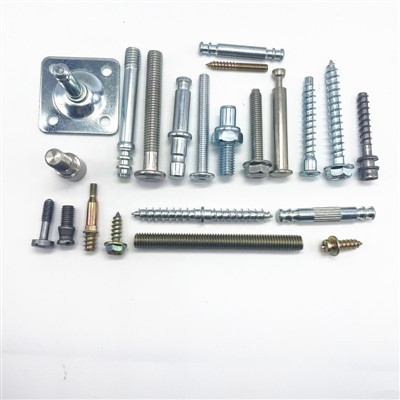
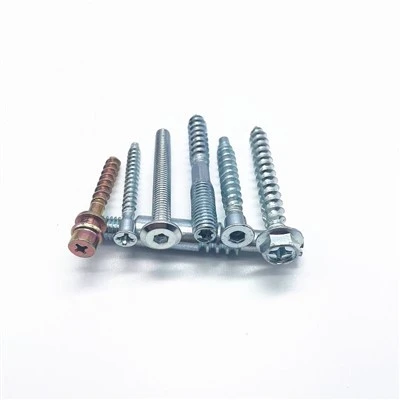
Furniture connector nuts, or joint connector nuts as they are also known, are made from a premium steel alloy, which provides an ideal level of strength and integrity throughout their use. These Nuts are most frequently used alongside Connector Bolts to connect and join furniture together, simply requiring screwing in to place for a long-term fixing solution. Each Threaded Connector Nut is able to be screwed onto the bolt to a specific range, helping to meet your sizing requirements for a particular object or piece of furniture. Furniture Connector Nuts are a perfect pairing with Connector Bolts to connect joints, available in a huge range of thread sizes and lengths to suit your specific use.
Provide CAD Files Or 3D Files or Samples
Only through the above information you provided we can know the size, precision, and key features of the product to be controlled, which is the basis for us to accurately evaluate the price of the product.
Get a Quote
Tell us the quantity of products you need, and we will provide you with corresponding ladder prices according to different quantity requirements.
Specify Process, Material, Surface Treatment
If your requirements are consistent with the drawings you provide, it is not necessary to specify.
Order Your Parts
Send your order to us, we will reply to your specific delivery date.
Receiving Your Parts
After the order is completed, we will notify you in time and cooperate with you in logistics operations.
Types of Furniture Nuts
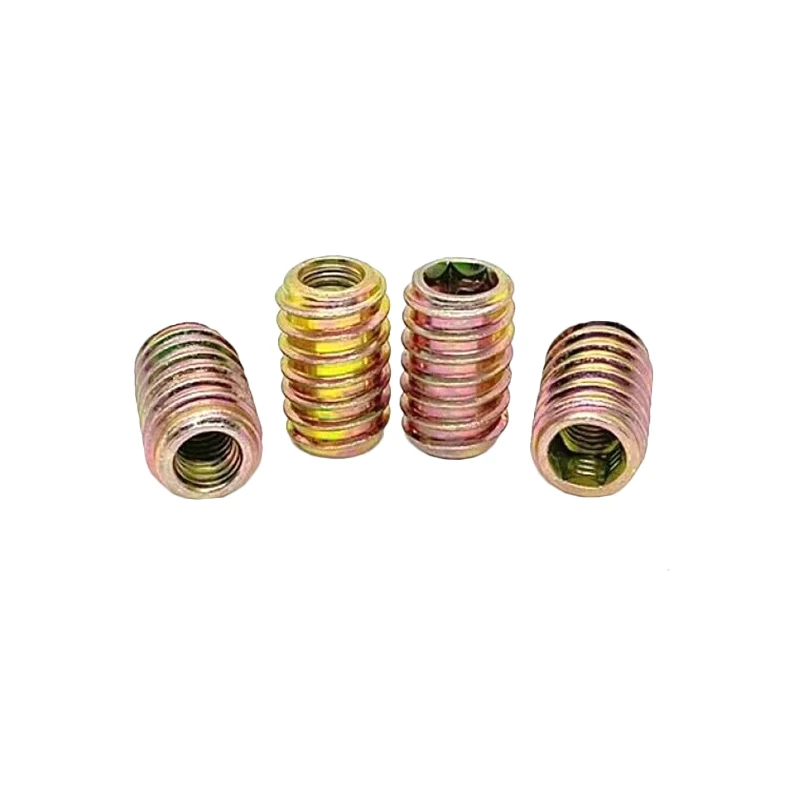
D-Nuts
D-nuts are a self tapping insert for wood, typically used for knock down furniture assemblies, providing a strong and permanent thread for wood and wood based sheet material.
These D Insert Nuts provide a strong, permanent thread for wood and wood-based sheet materials.
The incorporated flange alleviates splitting and prevents the Insert Nut from being driven in too far.
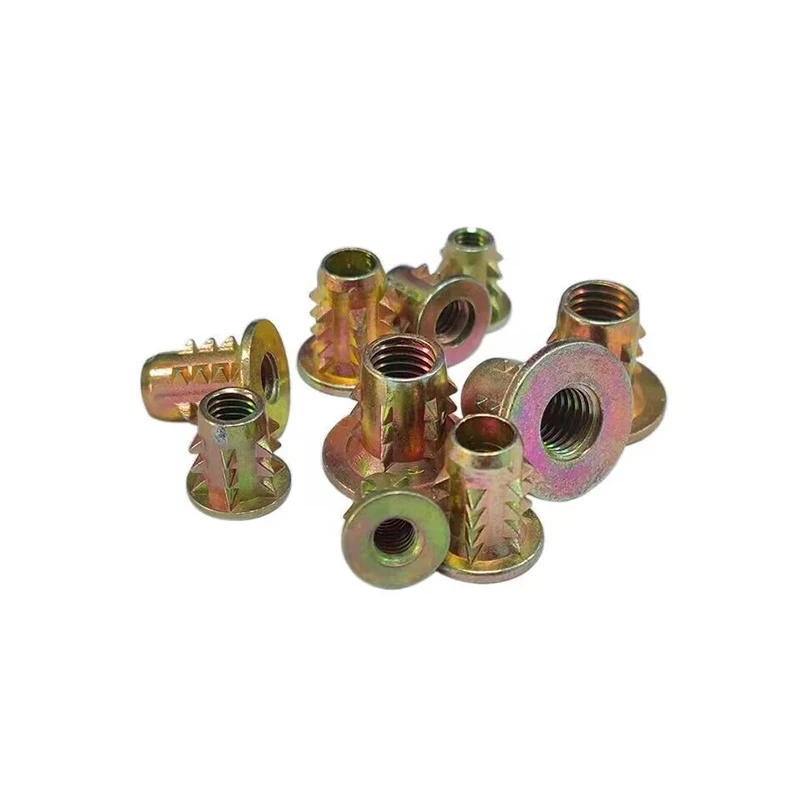
T-Nuts
A T-nut, T nut, or tee nut is a type of nut used to fasten a wood, particle or composite materials workpiece, leaving a flush surface.
T-nuts are threaded steel inserts with prongs that insert claws into wood when they are tightened, and often work when wood screws fail. After a T-nut is installed, a common bolt is used to join corresponding parts together.
T-nuts and are more effective than wood screws. They are less likely to strip, or cause cracks or splits in any type of wood.
Parts can be mass-produced with T-nuts, assembled and reassembled for shipping purposes, or packaged as a kit. T-nuts resist movement and vibration, and can be tightened at regular intervals.
Because they have prongs, t-nuts grip softer materials, such as particle board, better than wood screws, which tend to strip.
Now available in Stainless Steel also.
Available in Metric and BSW series.
MINIFIX
Furniture connectors represent furniture functionality by connecting planks of wood and giving a piece of furniture shape, function and life.
In the furniture industry today, minifix fastener is the most important and improved connector.
Mainly used to secure flat packed furniture The Cam dowel when used with a Cam Lock is called Minifix.
The Advantages of T-Nut Hardware
Secure and Stable Connections
One of the primary advantages of T-nut hardware is its ability to create secure and stable connections. T-nuts are designed with a unique shape that allows them to embed firmly into wood, particleboard, or other materials. When paired with compatible bolts or screws, T-nuts provide a reliable connection that withstands vibrations and prevents loosening over time. This ensures the longevity and durability of your projects, giving you peace of mind.
Easy and Convenient Installation
T-nut hardware offers an effortless installation process. It involves drilling a hole slightly larger than the T-nut's diameter, aligning it with the hole, and tapping it into place. Once installed, the T-nut remains firmly anchored, ready to receive bolts or screws. This simplicity makes T-nut hardware a preferred choice for both professional craftsmen and DIY enthusiasts, saving time and effort during assembly.
Reusability and Adjustability
Unlike other types of fasteners, T-nut hardware allows for easy disassembly and reassembly. This reusability feature makes T-nuts an excellent choice for projects that may require modifications or adjustments over time. Whether you're building furniture, installing equipment, or constructing fixtures, T-nut hardware enables you to make changes without compromising the integrity of your work, providing flexibility for future adaptations.
Versatility and Compatibility
T-nut hardware offers exceptional versatility in terms of compatibility with different materials and applications. It can be used with various thicknesses of wood, allowing for flexibility in design and construction. Additionally, T-nuts come in different sizes and configurations to accommodate different bolt or screw types, providing a wide range of options for your specific project needs. This compatibility ensures that T-nut hardware can be seamlessly integrated into a variety of woodworking and assembly applications.
Enhanced Load-Bearing Capacity
Another notable benefit of T-nut hardware is its impressive load-bearing capacity. The embedded design of T-nuts provides a larger surface area for distributing the load, increasing the overall strength of the connection. This makes T-nut hardware an ideal choice for heavy-duty applications such as furniture construction, equipment mounting, or securing structures. The sturdy connections offered by T-nuts ensure that your projects can withstand substantial weight and pressure without compromising safety or stability.
How to Know Which Furniture Fasteners are for Your Customers
How to Choose the Best Fasteners
First, you should ask the customer what they’re creating and their skill level. Some fasteners are more difficult to use than others, depending on your familiarity with the tools, equipment, and supplies needed to assemble your work. However, reminding them to look up diagrams or tutorials on their desired furniture pieces will help them determine which joinery to use. For example, if they’re connecting chair legs or creating door frames, they can find an illustrated picture listing the recommended fasteners.
The Best Connectors to Use
In the furniture industry, there are various hardware and wooden connectors specifically designed for connecting materials. Fasteners fall into three categories: internal, mechanical, and direct fastening.
Internal: Installed and covered within the material.
Mechanical: Connectors that you can tighten and adjust easily.
Direct: Connectors that are driven through one piece into another, like nails or screws.
Most woodworking fasteners are internal, meaning they are installed out of sight and have a seamless finish. Many furniture manufacturers are starting to provide internal fasteners in ready-to-assemble kits because they’re aesthetically pleasing and easy to use, even for beginners. Below are a few furniture fasteners you should recommend to your customers for being durable, easy to use, and guaranteeing a long-lasting finish.
Biscuit Joint: These egg-shaped connectors are installed internally, meaning they’re hidden within the material, which can boost the overall look of the furniture piece. This joint is popular when creating coffee tables or tabletops and requires glue to help strengthen the hold. The glue will make the wood swell, which will help secure the bond between the slits of the opposing piece.
Butt Joint: One of the easiest furniture fasteners to install is the butt joints. We recommend that our beginner woodworkers use these joints because it involves butting together two pieces of wood. However, these joints are not as strong as the others, so they could use some reinforcement when installed. You can secure these joints using nails, screws, dowels, or heavy glue.
Dovetail Joint: Let’s introduce you to one of the strongest connectors: dovetail joints. This joint is highly recommended because the connected pieces have resistance from being pulled apart. Their trapezoidal shapes connect them, and the joint locks in place once you glue it. Dovetails don’t require mechanical fastening and are permanent after installment. So, it’s always best to do a test run before installing.
Cams and Bolt: For projects that require mechanical furniture fasteners, cam fasteners and bolts get the job done. This fastener offers the option of disassembly and reassembly, which is a plus in case you need to realign. These fasteners are typically used when assembling ready-to-assemble furniture and don’t require special tools. Cam lock nuts and bolts are a great alternative to traditional wooden joints.
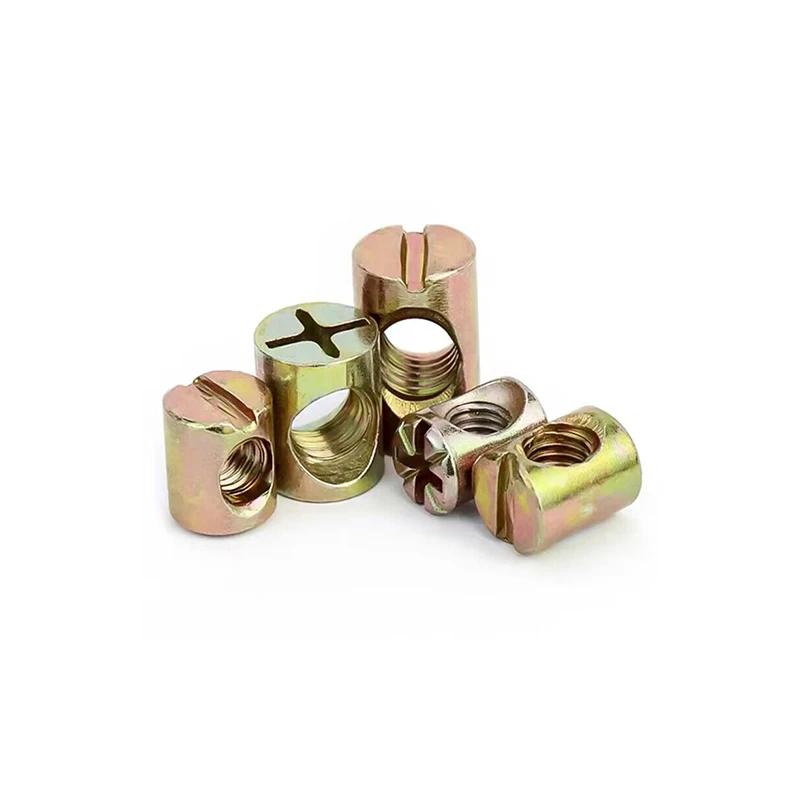
Cross Dowel Nut and Bolts: A cross dowel is an alternative nut and bolt that helps keep your furniture assembly strong and in place. These metal-based connectors come in various sizes and diameters for different project requirements. Cross dowels are extremely handy for those performing DIY projects, but you should always use high-quality parts to ensure a sturdy piece of furniture and customer satisfaction.
Systems to Consider
When your customers shop for fasteners and connectors, they may share with you what they’re building and express that they need help finding the best way to get an accurate fit. When creating anything, it’s important that you have precise cuts and fits to ensure that your pieces will come together seamlessly. However, when you’re building furniture, it’s essential. Can you imagine eating at a table with two different leg sizes? Below are a few modern connector systems to help get an accurate joinery with no skill needed.
Beadlock Jig: For those using mortise and tenon joints, beadlock jigs help you achieve a super strong hold. When using this device, you need only a drill and enough loose tenon stock for your project. However, we don’t recommend this product if you’re working on multiple or large projects. Beadlock jigs are best suited for smaller projects since they are tedious and may take longer to finish.
Plate Joiner: This woodworking power tool is the perfect solution for getting precise cuts every time. A plate joiner cuts crescent-shaped holes into the opposite pieces of wood to help your biscuit connectors perfectly fit every time.There are two types of plate joiners to choose from: barrel-gripped or D-handles. Barrel-gripped plate joiners extend from the tool, allowing the user to have more hand room and better control of the tool. However, if you plan on using this tool for an extended period, D-handle is your best option. D-handle plate joiners are more comfortable to hold and use.
Doweling Jig: For beginners, you should recommend that they use a dowel jig to ensure they get accurate joints every single time. There are various dowel jigs at different price points. We recommend buying different types of jigs to accommodate different skill levels. Whichever kind of jig you purchase, your customers can create better edge joints and build new ones with these tools.
Furniture Assembly Tips Everyone Should Know
Prepare in Advance
At the outset, make up your mind on the type, style, and size of furniture you’d want to install. Take precise measurements of the area where you will position the flat pack. Furthermore, make sure you have sufficient space to work.
Make Space for Assembly
Be sure to assemble the flat pack in the room where you want to place the furniture. If the final piece is larger than the entryway to your room, it may cause unwarranted damage. You may even have to go through the hassle of taking it apart and putting it together.

Sort-out
Once unpacked, identify the different sections and sort them in terms of their functionality. You may also want to segregate the various nuts and bolts, knobs, washers, screws, caps, and cam bolts, and keep them in separate cups.

Keep the Appropriate Tools Handy
Your flat pack consignment will be delivered to you along with the essential tools necessary to join the distinct parts. Some of the basic tools include an Allen key, hammer, rubber mallet, wrench, Philips-head screwdriver and a flathead screwdriver. You may have to buy a few tools to connect the parts of a sophisticated item.
Empty Out the Package
Cut open the pasteboard containers very carefully so as to avoid damaging or scratching the pieces inside. Once you’ve unpacked all the cardboard boxes, check to ensure that all the flat pack components are present. Flatten the box containers and lay them on the floor to steady the pieces and also to shield the floor from grazes.

Read the Instructions Carefully
Your flat pack box pack will come with an instruction manual providing guidance on how to assemble the parts. The manual may also include illustrations that’ll give you a good idea about the process. There’s no gainsaying that you should read and follow the guidelines strictly.
Common Problem of Furniture Nut