

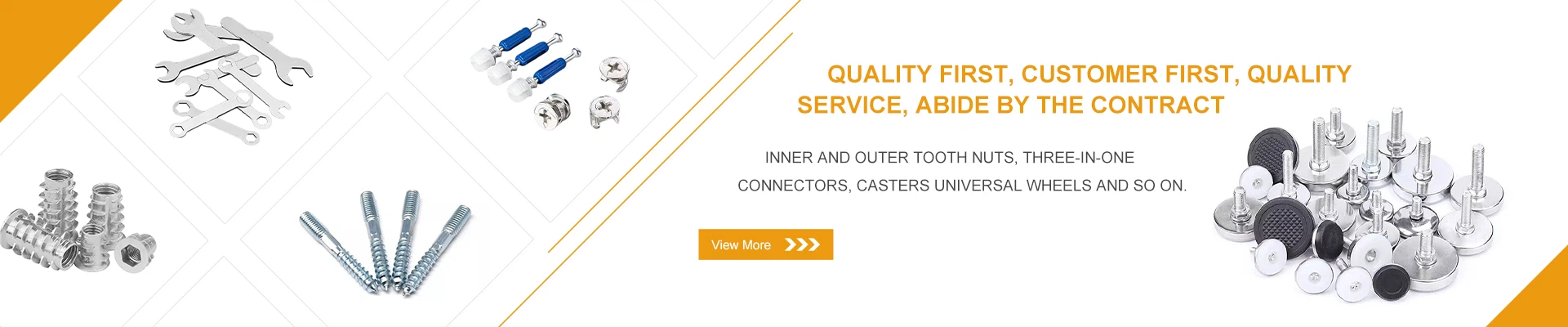


Light Medium Duty Castors
Haodeli: Leading Light Medium Duty Castors Manufacturer in China!
Shenzhen Haodeli Furniture Fittings Co., Ltd. (referred to as "Haodeli Hardware Fittings Factory") is a manufacturer specializing in the production and sales of furniture hardware accessories and furniture plastic accessories manufacturers. The main products are: inner and outer tooth nuts, three-in-one connectors, casters universal wheels and so on.
Wide Product Range
We can export various custom fasteners with a wide variety of plating, which includes different colors of Zinc, Black Oxide, Black Anodizing, Tin, Silver, Waxing, Passivation, Nickel, Antique Brass, Chrome, Cadmium, GM Spec, Magni Coating, Chrysler spec, and so on.
Quality Raw Materials
We supply both inch and metric fasteners. Our fastener line includes a wide range of materials such as steel, stainless steel, brass, silicon bronze, Hastelloy, Inconel, Monel, aluminum, alloy 20, 17-4PH, 17-7PH, titanium, and other non-ferrous metals.
Quality Guaranteed
From quality testing of raw materials to the careful management of manufacturing processes and the comprehensive testing of finished products, we can deliver customer orders that live up to and exceed expectations.
Advanced Equipment
With state-of-the-art Japanese technology power coating lines and professional fabrication machines such as automatic welding and tube laser cutting machines, customers can be assured that every product will be fabricated with precision and care.

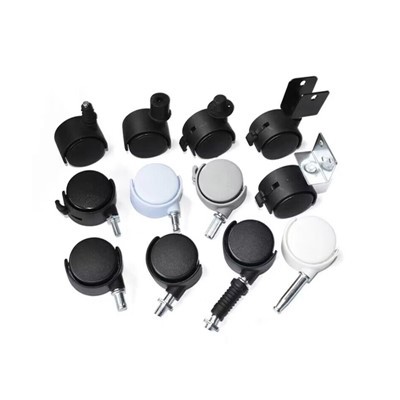


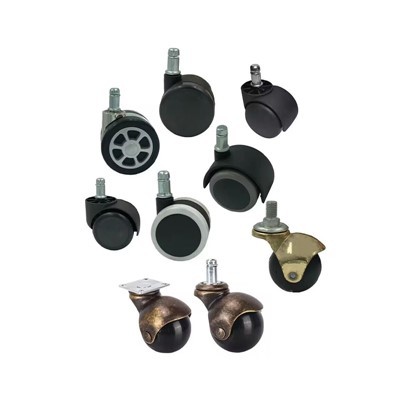
Introduction of Light Medium Duty Castors
Light medium duty casters have double row ball bearing swivel raceway assembly allowing for easy rolling. Many wheel type options are available for different applications. These casters come in a variety of sizes with different brake and wheel options. Load capacities range from 175 to 350 lbs per caster.
Typical Applications: Food service industries, wire shelving, material handling carts, food processing equipment, bakery racks, conveyors, laboratory equipment, retail displays, and store fixtures.
Provide CAD Files Or 3D Files or Samples
Only through the above information you provided we can know the size, precision, and key features of the product to be controlled, which is the basis for us to accurately evaluate the price of the product.
Get a Quote
Tell us the quantity of products you need, and we will provide you with corresponding ladder prices according to different quantity requirements.
Specify Process, Material, Surface Treatment
If your requirements are consistent with the drawings you provide, it is not necessary to specify.
Order Your Parts
Send your order to us, we will reply to your specific delivery date.
Receiving Your Parts
After the order is completed, we will notify you in time and cooperate with you in logistics operations.
The Difference Between Light, Medium and Heavy Duty Casters
Light Duty Castors
Description
Light-duty castors are a type of castors designed to handle lighter loads and offer smooth mobility for various applications. They are ideal for situations where the weight of the objects being moved is relatively low, and heavy-duty castors are not necessary. Light-duty castors come in different sizes and configurations, and they are commonly used in a wide range of industries and everyday settings. Here are some key features and common uses of light-duty castors:
Features of Light-Duty Castors
● Load Capacity: Light-duty castors typically have lower load capacities compared to heavy-duty castors. They are suitable for loads that fall within a specific weight range, which can vary depending on the design and size of the castor.
● Wheel Materials: Light-duty castors often feature wheels made from materials like plastic, nylon, or rubber. These materials provide smooth rolling and quiet operation while protecting floors and surfaces from damage.
● Swivel and Fixed Options: Light-duty castors are available in both swivel and fixed configurations. Swivel castors provide excellent maneuverability, allowing movement in any direction, while fixed castors offer stability in a straight-line direction.
● Bearings: Light-duty castors may have plain bearings or sleeve bearings, which are suitable for lighter loads and less demanding applications.
Common Uses of Light-Duty Castors
● Furniture: Light-duty castors are commonly used in furniture, such as chairs, tables, and cabinets, to enable easy movement and rearrangement. They are especially popular for office chairs and movable storage solutions.
● Retail and Display: In retail settings, light-duty castors are often found on display racks, shelves, and trolleys, making it effortless for staff to rearrange merchandise and create versatile store layouts.
● DIY Projects: Light-duty castors are popular choices for DIY projects, such as creating custom carts, dollies, and workbenches, where the mobility of lightweight loads is required.
● Office Equipment: Light-duty castors are used in various office equipment, such as printers, photocopiers, and small file cabinets, allowing easy movement and positioning.
● Home and Garden: In households, light-duty castors find application in moving small furniture items, garden carts, and lightweight outdoor equipment.
● Medical and Healthcare: Light-duty castors are employed on medical carts and equipment that require easy transport between patient rooms or medical facilities.
● Entertainment and AV Equipment: Light-duty castors are often used on AV stands, speaker stands, and mobile carts for audiovisual equipment.
Medium Duty Castors
Description
Medium-duty castors are a type of castors that are designed to handle moderate loads while offering a balance between strength and maneuverability. These versatile castors are commonly used in various industries and applications where the load weight falls between light-duty and heavy-duty requirements. Here are some key features and common uses of medium-duty castors:
Features of Medium-Duty Castors
● Load Capacity: Medium-duty castors typically have a higher load capacity compared to light-duty castors but lower than heavy-duty castors. They are suitable for applications that involve moderately heavy loads.
● Wheel Materials: Medium-duty castors often feature wheels made from durable materials like rubber, polyurethane, or nylon. These materials provide a good combination of strength and shock absorption, making them suitable for various indoor and outdoor surfaces.
● Swivel and Fixed Options: Medium-duty castors are available in both swivel and fixed configurations. Swivel castors provide excellent maneuverability, while fixed castors offer stability in a straight-line direction.
● Bearings: Medium-duty castors may have roller bearings or ball bearings, which allow for smoother movement and reduced rolling resistance.
Common Uses of Medium-Duty Castors
● Material Handling: Medium-duty castors are commonly used in material handling applications such as carts, dollies, and trolleys in industries like warehousing, distribution, and manufacturing.
● Furniture and Retail Displays: Medium-duty castors are suitable for movable furniture items like shelves, workstations, and display racks in retail stores and commercial spaces.
● Institutional Equipment: They are often used in equipment like medical carts, laundry carts, and hospitality trolleys, where durability and mobility are essential.
● DIY Projects: Medium-duty castors are popular choices for DIY projects, such as creating custom furniture, workbenches, and rolling storage solutions.
● Office Chairs: Some office chairs feature medium-duty castors, providing ease of movement and comfort for everyday office use.
● Mobile Workstations: Medium-duty castors are frequently used in mobile workstations, allowing workers to move their tools and equipment efficiently.
● Industrial Applications: In industries like food processing, automotive, and electronics, medium-duty castors find application in various equipment and machinery that require mobility and stability.
Heavy Duty Casters
Description
Heavy duty casters are designed for use in both industrial and commercial settings where heavy loads need to be moved quickly and efficiently. These casters are made from high-quality, durable materials designed to withstand significant loads without breaking or wearing out over time. Various heavy duty casters are available to fit every application from single wheel swivel and rigid casters, to dual wheel casters for high capacity applications and spring loaded for when protection of equipment is important. Swivel casters are designed to rotate 360 degrees, allowing for easy maneuvering in tight spaces, while rigid casters are fixed in place, providing stability and support for heavier loads. Additional accessories such as swivel lock, brakes and toe guards can be added to fit all of your caster needs.
Features of Heavy Duty Casters
● Parabolic Wheel Face: The number one feature that makes an ergonomic caster truly ergonomic is its parabolic wheel face, which is used to reduce friction and minimize tread wear. This reduced friction also helps to minimize scrubbing when moving the load around corners or obstacles, which further reduces the risk of injury.
● Independently Rotating Wheels: Dual-wheel casters can greatly reduce the risk of injury by allowing especially heavy loads to remain closer to the floor, thereby lowering their center of gravity and making them much easier to push and move. In a truly ergonomic caster wheel, both wheels in a dual-wheel setup should be able to move independently of one another, which reduces friction and minimizes scrubbing that can cause problems during load navigation. Independent rotation can also reduce the risk of damage to flooring surfaces.
● Thick, Tapered Tread: The tread on a caster wheel is important for ergonomics, too. The tread should be tapered in such a way that it can dispel debris off to the sides as it moves, reducing the risk of a sudden stop or damage to the wheel itself. The tread should be thick enough to reduce friction by keeping the metal part of the caster away from the floor, and it should also wear consistently to reduce the risk of flat spots in the wheel. When these benefits all come together, it results in a safer caster that wears more evenly throughout the course if its life, thus resulting in a longer overall lifespan than non-ergonomic casters.
● Aluminum Core: The aluminum wheel core is also an important part of a truly ergonomic caster. Aluminum is a lightweight material that provides much of the same durability as heavy materials like steel. The lighter the core, the easier it is to move the caster, and the less energy the operator exerts. Aluminum is beneficial for several other reasons, too, including its pleasant aesthetic appearance and its ability to resist rust in high humidity or even when it comes into contact with water.
Common Uses of Heavy Duty Casters
● Waste Removal: Collecting community waste and moving them can be a challenge as that can be in thousands of pounds. Use of heavy duty casters can thus be used in casters that can have garbage bins and waste collection points thereby collecting all the waste and facilitating their movements to the garbage trucks or to other disposal points. As such, caster wheels are now used in all such heavy duty operations that deal with handling waste in housing societies and communities and effectively moving and disposing them. With the use of casters, waste can be removed quickly and effortlessly by one or two people. Moreover, the maneuverability that the casters add is an additional advantage.
● Transportation and Moving: In many types of transportation and relocation requirements, these casters can be used to move around a lot of heavy stuff such as furniture, household goods, packages, etc. In many warehouses, these heavy duty casters are used to carry the material and goods in the warehouse from storage to the trucks for loading and vice versa. There are many other areas where these are used to carry the load in that weight range. Using these casters facilitate the movement of heavy packages, goods, and materials in warehouses or by relocation services seamlessly and easily.
● Industrial Applications: Industrial setups have varying load hauling needs and therefore there are different caster wheels for all such needs. As such the heavy duty caster wheels can be used in all such industrial needs where a load hauling capacity between 450 to 5000 lbs is needed. These highly durable heavy duty casters help in pulling the loads with ease in all kinds of industrial setups.
● Movement of heavy medical equipment: Some medical equipment may also be very heavy and may need Heavy Duty Casters to be moved. These may include units such as X-Ray machines, USG equipment, MRI equipment among other Critical Care Unit equipment. All such equipment may need to be transported and moved using these heavy duty casters. While some may have these installed beneath them, others may have to be mounted on caster platforms and transported. But in all such applications, their use is indispensable.
Benefits of Regular Caster Wheel Maintenance
If you want your caster wheels to last a long time, provide them with regular check-ups, cleaning, and maintenance. Here are the benefits of properly caring for your caster wheels:
Better Performance
With regular maintenance, your caster wheels glide smoothly across the floor. You're less likely to damage whatever they're carrying.
01
Longer Life
With constant usage, your caster wheels slowly suffer wear and tear, which shortens their life. With regular maintenance, you reduce the rate at which that occurs.
02
Increased Safety
Broken or damaged caster wheels pose a safety threat to your workers and your property. Checking them regularly ensures you identify and fix any safety concerns before it's too late.
03
Cost Savings
Repairing or replacing a caster wheel can involve considerable expense. If you catch problems before they become serious, you can save money on repairs and replacement.
04
Environmental Friendliness
When you reduce how often you have to replace your caster wheels, you're benefiting nature by reducing waste and promoting sustainability.
05
How to Maintain Light Medium Duty Castors


First, Make Sure that the Caster Wheels are Properly Lubricated
Lubrication is essential when ensuring that casters last as long as possible. In most cases, this means that caster wheels and their fittings should be lubricated roughly every six months. It’s a good guideline to follow, and it should be a scheduled time when all of a business’ casters and other hardware are inspected, lubricated, and ensured to work properly. It should be noted, however, that the six month timeframe is not a universal recommendation. The nature of many types of casters means that they’re often used in volatile environments where they frequently get wet. Still other casters are exposed to highly corrosive materials on a regular basis. In both of these cases, casters should be checked and lubricated on a far more frequent basis. When exposed to moisture and corrosive materials regularly, casters should be lubricated at least once each month to ensure their integrity.
Next, Check the Fasteners that Hold the Casters in Place
Just as important as the caster’s lubrication are the hardware fittings that ensure the wheel doesn’t move — or fall off entirely. These essential pieces of hardware are prone to regular wear and tear, especially because they’re working against the forces of gravity on a near daily basis in most environments. Once a month, every piece of equipment that has casters attached to it should be turned on its side. Then, business owners should begin inspecting the hardware that fastens the caster to the equipment itself. That means looking for nuts, How to Maintain Caster Wheels bolts, screws, and any other fittings that keep the wheel in place. If anything is bent, worn, or out of place, it should be fixed or replaced immediately. These minor defects can slowly ruin a caster and force its replacement over time in some situations, making it essential that they’re fixed earlier, rather than later.
Finally, Examine the Caster Wheel Itself and Make Any Necessary Repairs
Lubrication and fastenings are both important, but so is the integrity of the caster wheel itself. In most cases, casters come with a small treat or rubber fitting that allows them to make cleaner turns with less overall noise. these treads can sometimes flatten or might be slightly damaged by the floor on which they’re rolling. Such defects can, over time, place unnecessary wear and tear on the caster wheel itself; these defects can even ruin the hardware and lubrication fixes made in earlier steps of the maintenance process. Regularly check a caster wheel’s treads and construction for damage. If necessary, replace a damaged wheel or tread before it becomes a larger problem that necessitates the replacement of the entire caster itself. A monthly inspection routine is probably a good idea for most business owners when ensuring the long-term integrity of the caster.
Choosing the Right Replacement Casters
Selecting a new set of casters isn’t as simple as buying a new pair of shoes. It’s a bit more complex, and there’s more at stake here. Here are some pointers to consider when looking for a replacement:
Load Capacity
Your new caster should be able to handle the load of your equipment. If you’re replacing a caster on an industrial cart, for example, you’ll need a caster with a high load capacity. Our range of industrial casters is designed to handle substantial loads while ensuring smooth operation.

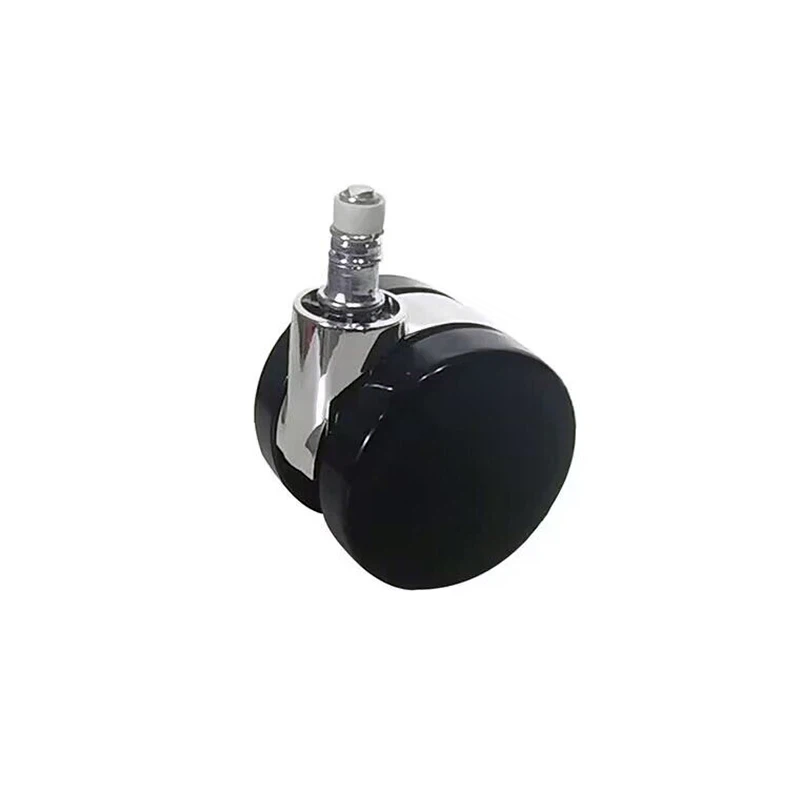
Wheel Material
The material of the caster wheel plays a crucial role in its durability and performance. Polyurethane wheels are resistant to many substances and work well on various floor types. Rubber wheels, while providing good cushioning, may not be the best for heavy loads.
Application
Think about where and how the equipment is used. If it’s for outdoor use, consider casters that are resistant to weather conditions. If it’s for use in a hospital or an office, consider casters that operate quietly and do not mark floors.

Mounting Type
Consider the mounting type of your current caster. If it’s a plate caster, you’ll need a replacement that can be bolted onto your equipment. If it’s a stem caster, you’ll need a replacement with a compatible stem size and type.
Locking Mechanism
If your previous caster had a brake or lock mechanism, you might want to ensure your replacement caster has the same feature for consistency and safety.


Fix Caster Flutter
Mitigate caster flutter by using a longer kingpin, reducing the caster angle, applying a dry lubricant to the swivel assembly, using a larger bearing, or increasing the distance between the axle and the plate top.
Common Problem of Light Medium Duty Castors